
Hungary’s tax and customs authority has closed the money-laundering investigation connected to the Hungary-Ukrainian gold convoy case, finding no evidence that the large quantities of cash and gold seized from Ukrainian couriers came from criminal activity. The case drew national attention before Hungary’s parliamentary election after heavily armed counter-terrorism officers intercepted the transport near Budapest.
The Criminal Directorate-General of Hungary’s National Tax and Customs Administration (NAV) terminated the proceedings because investigators concluded that no crime had been committed.
What happened in the Hungary Ukrainian gold convoy case?
The case began when officers from Hungary’s Counter Terrorism Centre, known by its Hungarian abbreviation TEK, stopped Ukrainian cash transporters at a rest area on the M0 motorway, the orbital road surrounding Budapest.
During the operation, authorities seized USD 40 million, EUR 35 million and nine kilograms of gold.
The timing of the raid, shortly before Hungary’s parliamentary election, quickly transformed what initially appeared to be a law-enforcement operation into a major political controversy.
The Orbán government publicly linked the incident to claims about a Ukrainian “war mafia”, while government politicians also sought to connect the case to the opposition Tisza Party, 24.hu reported.
The latest decision by NAV, however, found no evidence supporting the suspicion that the money or precious metals were linked to criminal proceeds.
If you missed it: Leaked documents point fingers to former PM Orbán’s role in raid of Ukraine’s gold convoy case
Investigators traced the assets to a bank transaction
According to NAV’s decision, presented by Lóránt Horváth, the lawyer representing the Ukrainian side, investigators established the origin of both the cash and the gold.
The assets originated from an interbank transaction between Raiffeisen Bank International AG and Ukraine’s state-owned JSC Oschadbank, the authority found.
Raiffeisen provided documentation demonstrating the origin of the banknotes and precious metals, as well as records showing that Oschadbank had paid the purchase price.
Based on the information collected during the criminal proceedings, investigators concluded that neither the banknotes nor the precious metals originated from a criminal offence.
NAV also found no doubts regarding the lawful source and ownership of the assets. As one of the legal elements required for a money-laundering offence was therefore absent, the authority concluded that no crime had taken place.
Investigators also found no indication of any other criminal offence, according to Horváth’s summary of the decision.
Why the case became politically significant in Hungary
For international readers, the importance of the case goes beyond the unusually large amount of cash and gold involved.
Relations between the Hungarian government led for years by Viktor Orbán and Ukraine have frequently been tense, particularly over the war, EU policy towards Kyiv and Hungary’s approach to military and financial support for Ukraine.
Against this background, the seizure became part of the domestic political campaign ahead of the Hungarian election. Government messaging surrounding the operation portrayed the incident as evidence of criminal networks connected to wartime Ukraine.
The closure of the money-laundering investigation means that the central allegation concerning the allegedly illicit origin of the seized assets has not been substantiated by the Hungarian authorities.
A separate criminal case remains open
While the money-laundering investigation has been terminated, the broader affair has not completely disappeared from the criminal justice system.
A separate case concerns János Hajdu, director-general of TEK, who is reportedly suspected of unlawful detention.
The investigation relates to the treatment of seven Ukrainian citizens detained during the operation. As we wrote earlier, they were allegedly kept in handcuffs for more than a day without formally being made suspects. Details: Former PM Orbán’s anti-terrorism force chief suspect in Ukrainian ‘gold convoy’ case
Hajdu previously served as a personal bodyguard to former prime minister Viktor Orbán.
The NAV decision therefore closes one of the most politically charged elements of the Hungary-Ukrainian gold convoy affair, but scrutiny of the authorities’ handling of the operation continues. The remaining investigation could now shift attention away from the origin of the money and gold and towards whether Hungarian law-enforcement officers acted lawfully during the detention of the Ukrainian nationals.
Read also:

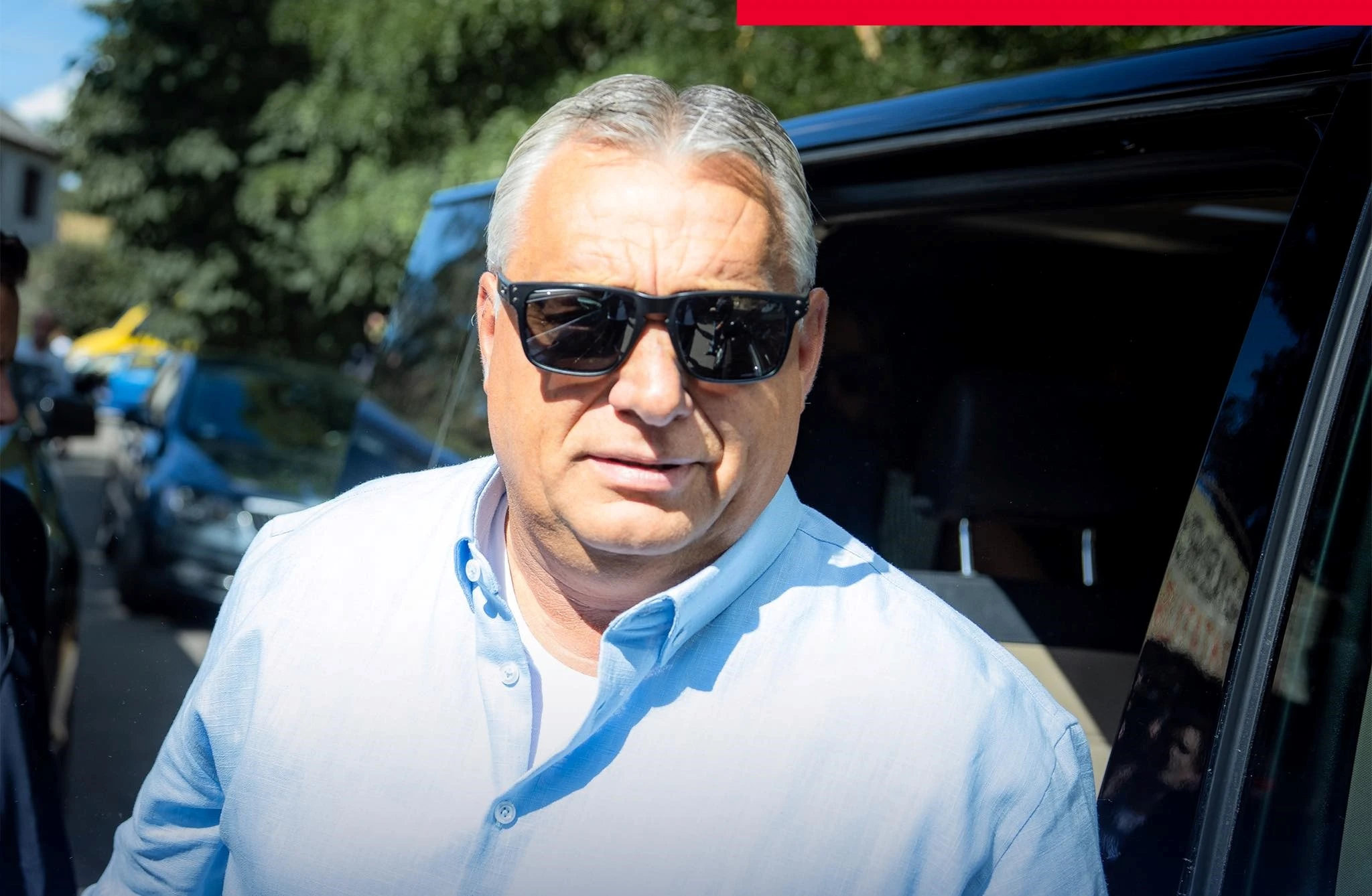


Viktor Orban was that depraved that he would actually risk the lives of a group of people on a bank convoy by sending heavily armed commandos on a hijacking mission all to create a false story of money laundering to somehow help his election chances. Orban has no honour, no morals and is a traitor who not only stole the money of Hungarians but sold out the security interests of Hungary and Europe to Putin.
! orban should get ANOTHER 16 years! IN JAIL!