Although not the first place you might think of when talking about coffee, Hungary has a long association with the drink that stretches back many years. Here, we look at the past and present of coffee and café culture in the country.
written by Kathy Gallo
The beginning – arrival in Hungary
Coffee drinking began in the Middle East, probably in Yemen in around the mid-15th century. From there, it spread to Persia, North Africa and Turkey in the 16th century and was brought to Hungary by the Turks.
It is thought that the first time it was seen in the country was when a package containing beans was sent to a Turkish merchant named Behrám in 1579.
However, the coffee-drinking habit did not initially take off among the local population – Hungarians back then referred to the drink as Fekete leves, meaning black soup.
An interesting anecdote tells that according to traditional Turkish practice, financial issues or any other unpalatable issues were never discussed during a meal – but when coffee was served, creditors were free to produce their unpaid accounts.
For this reason, to this day, Hungarians still use the expression “the black soup has not yet arrived”, which means “the worst is still to come”.
Increasing popularity – union with Austria
Photo: Kathy Gallo
Although coffee was not commonly drunk in Hungary, in neighboring Austria, a thriving coffee culture was already well developed. In the end, it was international geopolitics that finally caused coffee consumption to become fashionable among Hungarians.
With the Austro-Hungarian Compromise of 1867 and the closer relations between the two countries, coffee culture finally began to infuse Hungarian society. As Hungarian aristocrats and officers spent more time at court in Vienna, they brought back the Austrian penchant for the drink with them.
From this time, too, coffee in Hungary became known as kávé.
A new chapter in the story of coffee in Hungary had begun.
To World War I – a golden age for coffee in Hungary
Although a few German and Italian coffee shops existed in Pest (one half of the modern city of Budapest) during the 18th century, it was in the late 19th century that they began to proliferate.
At around the turn of the 20th century, it is thought that around 500 cafés had opened their doors in the city.
These coffee shops became important social venues in Hungarian society and were also frequented by writers, poets and artists. These intellectuals and thinkers would meet to drink coffee, to exchange ideas and to work.
Coffee culture became so central to artistic life in Hungary that cafés even provided ink and paper for free as well as serving something known as a “writers menu” of bread, cheese and cold cuts at a discount price.
The golden age of cafés in Hungary was the years from 1910 to 1930 – but with the arrival of the Soviet Union, things were set to change.
The Soviet years – suppression of the coffee shops
The possibility of intellectuals gathering in coffee shops to discuss seditious new ideas was not something the suspicious Soviet authorities were willing to tolerate. As a result, almost all of Hungary’s cafés were closed.
Coffee itself was seen as a luxury item enjoyed only by the privileged few, and the quality of what was available declined rapidly.
The golden age of Hungarian coffee culture at the beginning of the 20th century was followed by years of suppression. It wasn’t until relatively recently, following the fall of the USSR, that the café scene in Hungary began to show the first signs of revival.
Rebirth of coffee culture in Hungary – to the present
In recent years, coffee drinking and café culture have been undergoing a renaissance in Hungary. During the Soviet years, coffee was a precious commodity that was drunk in the home – if at all.
The traditional way of making coffee was using a special pot very similar to the Italian moka pot – there were few drip coffee makers or grind and brew coffee machines. It was in the home that the coffee-drinking habit was kept alive.
Things are different now. Coffee shops have once again sprung up in Hungary, and almost every town in the country has a good selection to choose from. As in the past, people are able to enjoy a coffee along with delicious traditional Hungarian cakes and good conversation.
People still use those traditional coffee pots to make old-style strong Hungarian coffee – Hungarians like to drink it black or highly sweetened, sometimes also adding milk or cream.
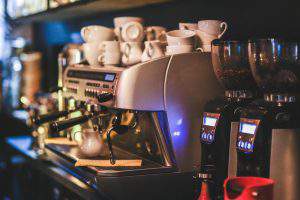
However, more modern methods of preparing coffee are also becoming more popular, and those drip coffee machines, all-in-one grind and brew coffee machines or home espresso makers are all gaining traction.
The Third Wave revolution
Hungary has not remained untouched by the Third Wave movement that has spread around the world, and in any of the larger cities as well as many smaller towns, you will easily be able to find coffee shops serving lovingly roasted and meticulously brewed specialty coffees.
Unsurprisingly, Budapest has the highest concentration of these establishments, and you will find plenty of cozy modern coffee shops using the latest techniques nestling alongside the few remaining venerable old cafés, the remnants from a bygone era.
One thing’s for sure, for any coffee lover making a trip to the Hungarian capital or anywhere else in the country, there are some delicious brews on offer along with a newly-vibrant local take on café culture that is waiting to be discovered.
The Hungarian ‘home barista’ trend is also on the rise, with many coffee enthusiasts bringing coffee technology into their homes. This coffee publication suggests buying at times when manufacturers are having sales to get the best quality equipment.
Some typical Hungarian coffees
Photo: Kathy Gallo
In Hungary, you will now find all the usual international-style coffee drinks like lattes and mochas – as well as the familiar international chains. However, Hungarians have taken these drinks to another lever, and you will find some impressive creations you are unlikely to see elsewhere.
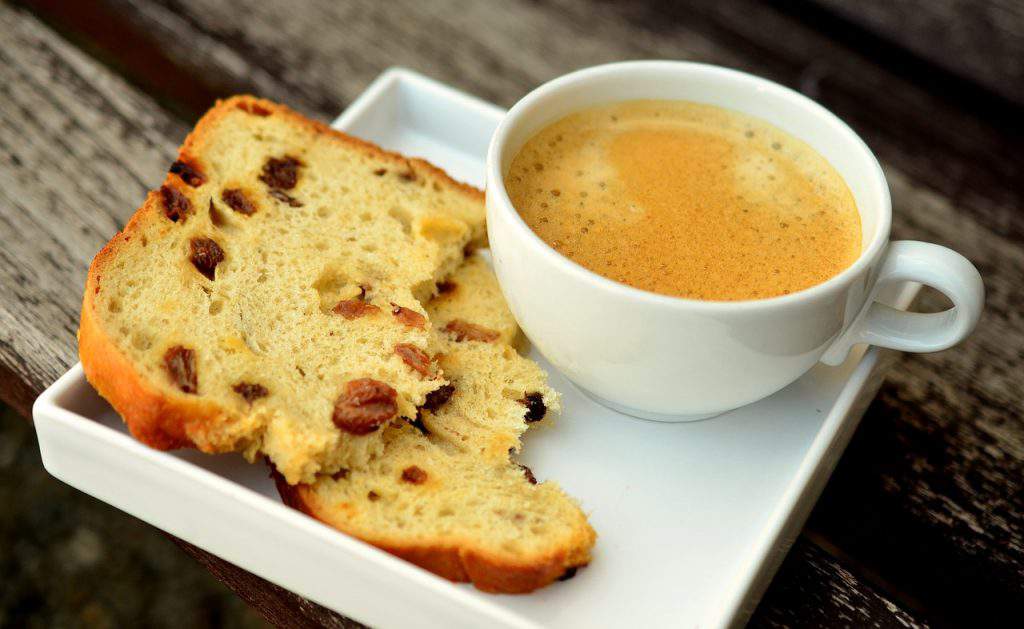
The traditional Hungarian coffee is known simply as a fekete (black), a kávé (coffee) of a pressókávé. For something more indulgent, order a bécsi kávé, a coffee served with ice cream, chocolate, foamed milk and whipped cream.
Also look out for the Hungarian melange – this is the Hungarian version of the classic Viennese coffee that arrived in Hungary during the period of close relations between the two countries.
A great coffee-loving nation once more
After the dark days for coffee during the Soviet years, café culture has rebounded in Hungary.
Whether enjoying a traditional Hungarian coffee at home or the latest specialty coffee in a modern coffee shop, Hungary has retaken its place among the world’s coffee-loving nations.
Lots of people use K-Cup coffee makers, such as these from Unclutterer, which are the perfect option to prepare a fragrant cup of coffee quickly for one person.
Photo: Kathy Gallo
LEGENDARY STORIES ABOUT THE WORLD-FAMOUS NEW YORK CAFÉ (Read more HERE)
Photo: newyorkcafe.hu/
Source: by Kathy Gallo
Continue reading
One comment
I grew up under the Communist regime, yet I remember numerous coffee houses in my home town and also Budapest. I don’t remember any shortage of coffee except it was expensive. These caffe houses ( Kàvèhàz or Presszo) were the place to have a date. Some of them are still operating since then, at least in my hometown and the famous ones in Budapest e.g. Gerbaud on Vörösmarty Square.




 Rebirth of coffee culture in Hungary – to the present

I grew up under the Communist regime, yet I remember numerous coffee houses in my home town and also Budapest. I don’t remember any shortage of coffee except it was expensive. These caffe houses ( Kàvèhàz or Presszo) were the place to have a date. Some of them are still operating since then, at least in my hometown and the famous ones in Budapest e.g. Gerbaud on Vörösmarty Square.