Subscribe to our social channels to get the latest news about Hungary!


The history of the metro lines of Budapest is quite rocky, but considering the other plans that were drawn up when it came to the design of the lines, nothing comes as a surprise anymore.
Pestbuda has collected some interesting plans regarding the Budapest metro lines from the past century.
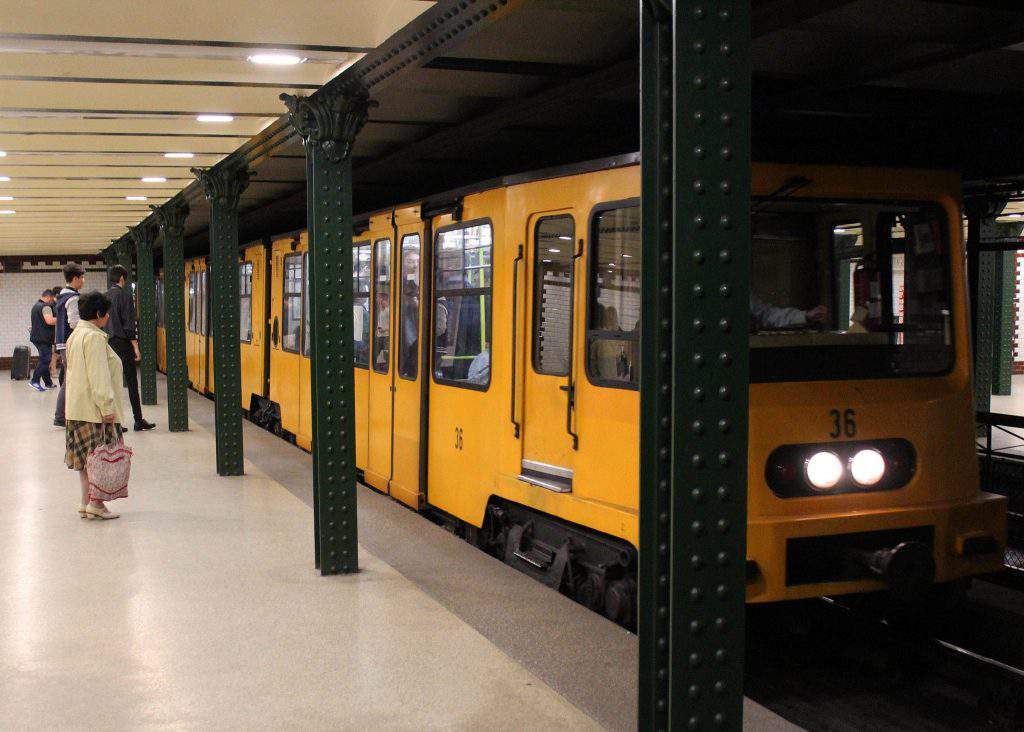
1 – As part of the Hungarian Millenium of 1896, an exhibition took place in City Park, but there was a great need for some means of public transportation to get there. Building a tram line was not appealing for the city officials, as the wide and beautiful Andrássy way would have lost its charm, so the Budapest Public Handcar Company (Budapesti Közúti Vaspálya Társulat) offered to build an underground tram line (metro line 1 today) in the nick of time.
Construction began on August 9th, 1894 and the line was opened on May 2nd, 1896.
It was almost immediately suggested that the line should be extended all the way over to Buda, and it is still a reoccurring plan up to this day.
2 – Several approaches were made to the underground railway lines of Budapest: Szilárd Zielinski suggested the construction of a subway that runs beneath Hungária boulevard, Sándor Garády’s 1912 plans involved a line that connects Déli, Nyugati and Keleti railway stations. Aside from this, Garády’s other plans looked a lot like the current lines today in Pest; though he only had one line in mind that would connect Buda with Pest.
The strangest one was a plan for a spiral line, drawn up in 1942:
it would have crossed from Pest to Buda beneath the Elizabeth Bridge, then come back to Pest north of the Elizabeth Bridge, beneath the Margaret Bridge, would follow the line of the Grand Boulevard (where trams 4 and 6 operate), only to return to Buda beneath the Petőfi Bridge, south of the Elizabeth Bridge.
3 – The planning of the deep running lines that we are all familiar with today began in 1947, and following a three-year period of measurements and testing, the government gave way to the building of the metro line on September 17th, 1950. According to the initial plans, the line connecting the east and west of the city (M2 today) should have been finished by 1955, but the construction industry was not prepared for this, and it proved to be too costly for the Hungarian economy.
4 – The original terminal of the east-west (M2) metro line would have been the Népstadion station (Puskás Ferenc Stadium today) in the following manner:
The HÉV from Gödöllő (H8 suburban railway line today) and the metro would have both arrived at the stadium underground, thus access would have been simpler.
Today, you can get to the HÉV by climbing a set of stairs, which, in Pestbuda’s opinion, is not a modern solution.
5 – According to the original plans from 1950, the Astoria stop did not exist, however, when the building of metro line M2 restarted in 1962, it was decided to have a stop here as well. There was a slight problem: the tunnels were already finished, so three extra passages were built between the two tunnels, in addition to the existing two.
So the five-passage, Budapest-style underground station came to be…
6 – The building of an underground suburban railway line H7 connecting with Kálvin square was just announced. However, it is not an entirely new idea to extend the suburban railway lines all the way into the city centre: according to a plan from 1950, suburban railway line H7’s terminal would have been Deák square instead of today’s Boráros square.
7 – Originally metro line M3 would have branched out: one would have connected Káposztásmegyer (northern part of district IV) with the city centre, the other Rákospalota (district XV).
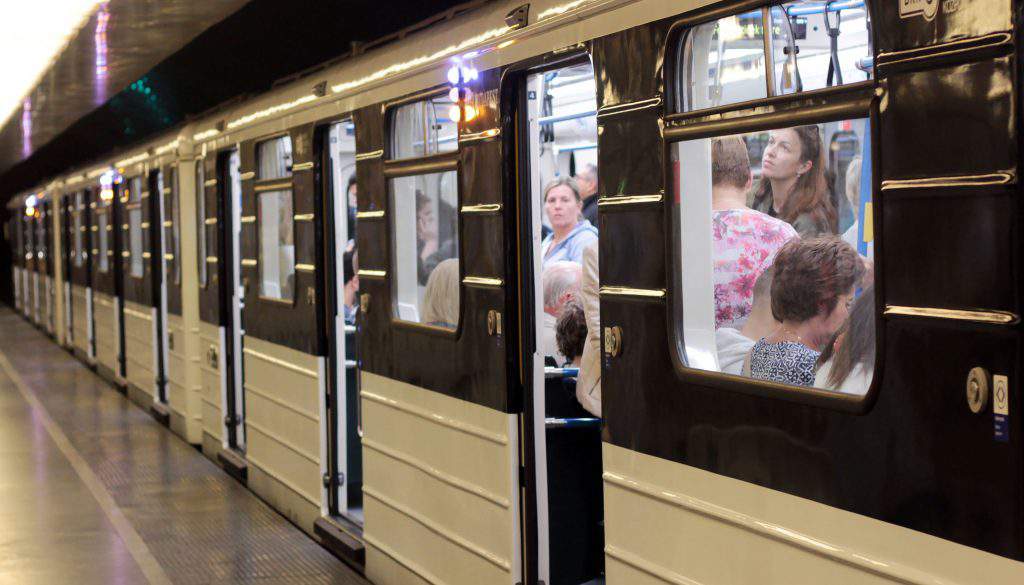
8 – The possibility of another metro (M4) and a suburban railway line connecting at Kálvin square was already considered when the M3 station was built, so even the passageways were planned, but
unlike the expectations, M4 runs above M3.
This is why, when trying to transfer from M3 to M4, we have to take the stairs down first, and then back up again.
9 – The line that M4 takes was considered already in the 1950 plans, with Budaörs as its surface terminal on Buda and it would have also branched out to Budafok. Its half-surface Pest terminal would have been in Rákospalota, the border of then-Budapest.
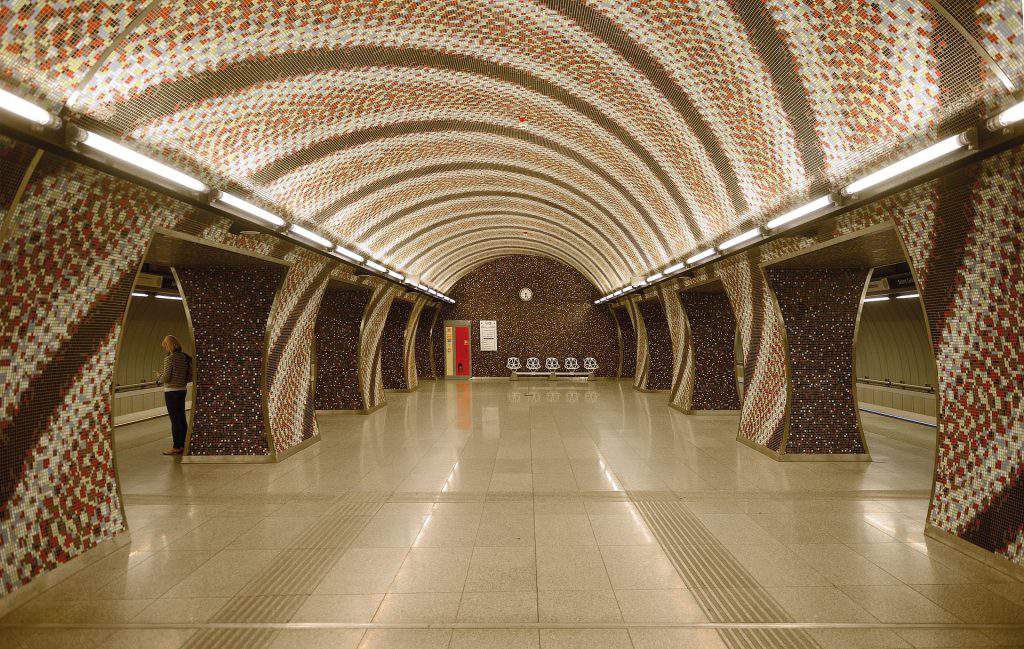
10 – During the planning of metro line M4 in the 1970s, there was a suggestion to connect Albertfalva (part of district XI) and Blaha Lujza square, or to have it branch out at Móricz Zsigmond körtér in Buda in two directions: to Kelenföld (current terminal) and to Budafok.
In theory, there is still a possibility to split the line in this manner, but at Újbuda Központ, not at Móricz Zsigmond körtér.
featured image: https://www.facebook.com/Budapesti4Metro/
Source: pestbuda.hu


